
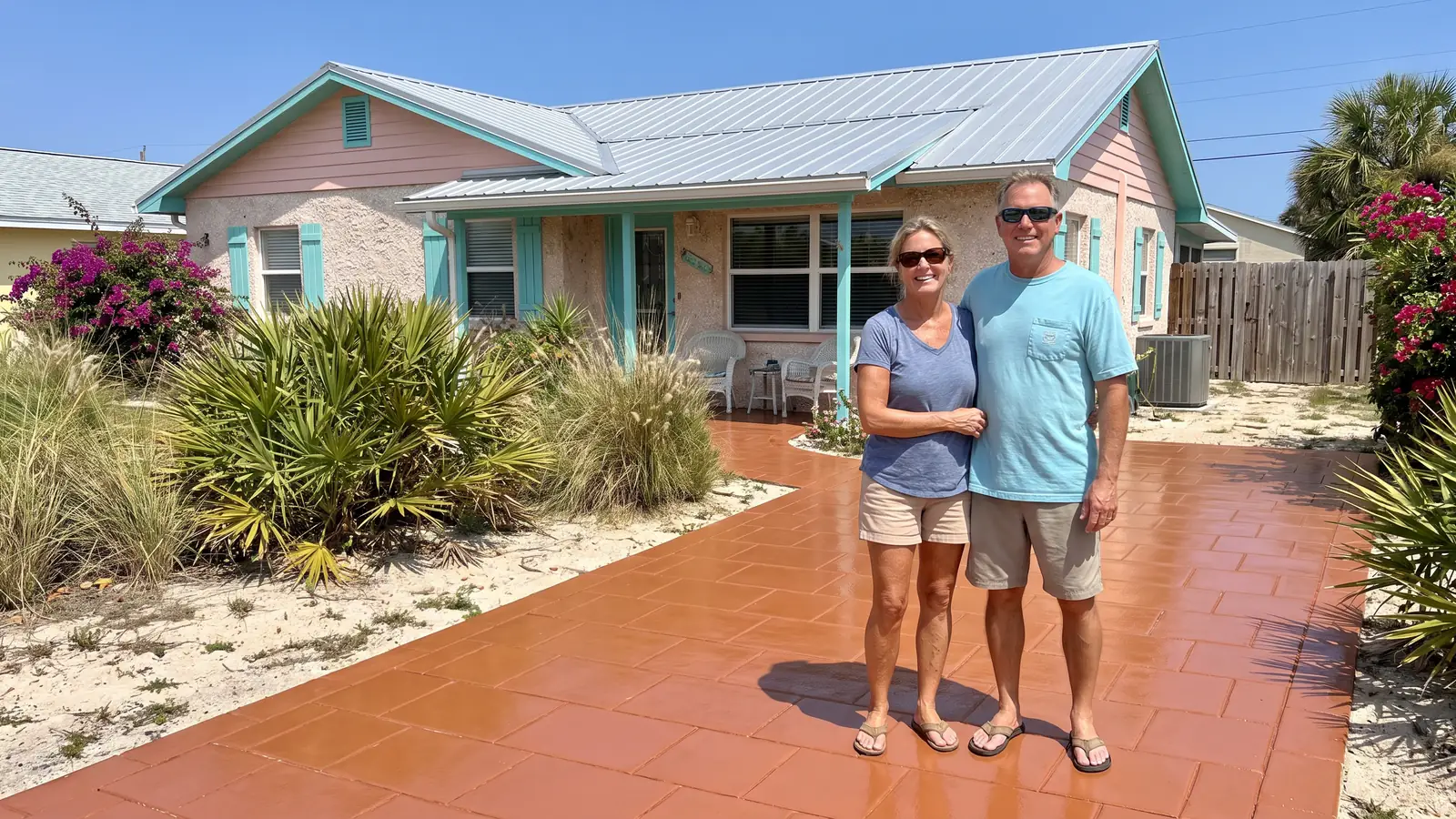
Paver sealing for Ponte Vedra Beach homes
Paver Sealing in Ponte Vedra Beach, FL
East of the Intracoastal, Ponte Vedra Beach pavers meet sea air and oaks; call (386) 270-5568 for a free sealing estimate.
- Brings out deeper paver color
- Fresh joint sand helps lock pavers in place
- Gives weeds less room to grow
- Makes the surface easier to keep clean
- Free estimate, no obligation
Request a Free Estimate
Free, no obligation.
Fast, careful paver sealing in Ponte Vedra Beach
Paver sealing is available in Ponte Vedra Beach, from the oceanfront streets to the golf and Intracoastal neighborhoods. The estimate is free, and the contractor cleans, re-sands and coats driveways, pool decks and courtyards. After you request a free estimate, look for a reply inside 1 business day, and usually well before that.
Salt air can turn a warm tan paver chalky, and live oak shade can leave one side of the drive green. Both can be cleaned and sealed so the surface reads as one color again. To describe your pavers and get a price, call (386) 270-5568, with no obligation.
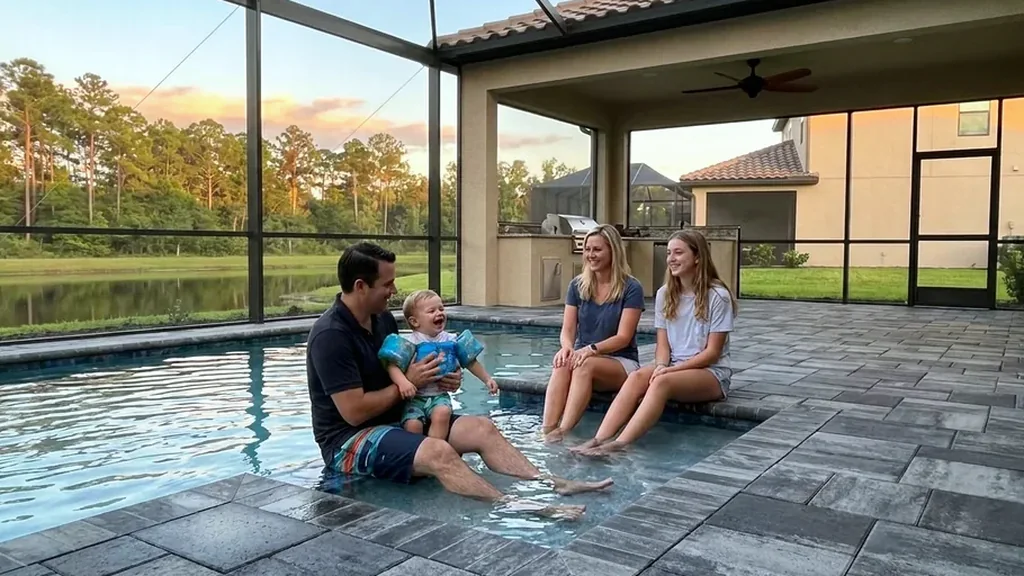
Why hire a local paver sealing contractor in Ponte Vedra Beach?
Ponte Vedra Beach homeowners often pick a local paver contractor because county tree rules, salt air and association guidelines all shape the work. To hear how that applies to your lot, request a free estimate.
A free visit and a price in writing
The contractor looks at your Ponte Vedra Beach pavers and writes the price down. You decide whether to go ahead.
A range you can compare
Northeast Florida firms commonly publish a range of $1.50 to $3.00 per square foot for the full clean, sand and seal. Use it to judge a bid.
Gentle washing near trees
High pressure can loosen joints, so the wash is matched to the surface. Roots and old stone get a careful hand.
Finish that fits the setting
Stone and stucco look right in matte. A wet look deepens concrete but picks up tire scuffs sooner.
Get Your Free Estimate in Ponte Vedra Beach
Tell us about your pavers in Ponte Vedra Beach.
Free, no obligation
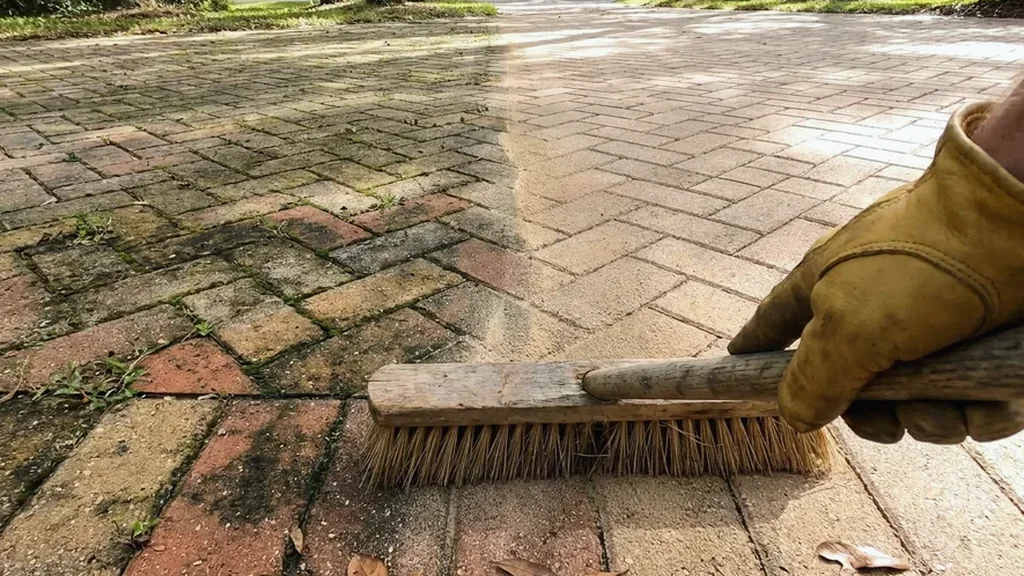
What paver problems show up most in Ponte Vedra Beach?
Salt that settles into bare pavers
One Ponte Vedra Beach paver company reports that salt works into the pores of bare pavers. With sun, it says, older ones turn chalky and the white aggregate shows. Another company says the sea breeze pushes salty air across the beaches and Ponte Vedra. It adds that driveways near the coast may need a new coat about every 18 to 24 months. Those are company claims, not rules. Still, a dull, chalky surface near the ocean is a clear sign that the coat has thinned. Sealer fills the pores, which means the salt has less to settle into. Ask the contractor to show you the chalky spots right on your drive, so you see what the wash and coat will change.
Roots from protected oaks
Ponte Vedra Zoning District Regulations protect oak, hickory, magnolia and other trees on residential lots. Any protected tree 10 inches or more across at chest height needs a county permit before removal, and pines and palms are exempt. That means a big oak beside your drive usually stays, and its roots keep growing. Roots can lift a paver edge or open a gap. Sealer would preserve the lift, so the contractor resets the pavers first. Ask an arborist before touching any root, since the tree itself is protected. The contractor only works on the pavers. A reset section, new sand and a coat can run on one visit if the base is sound.
A hard rinse that empties the joints
A paver company serving Ponte Vedra Beach says traditional high-pressure washing can loosen joints, erode the paver surface and dislodge joint sand. Sand packed by wind and rain is already moving on a coastal lot. So the wash is done with care, and fresh sand goes back before any sealer. The contractor picks a method that suits your surface. Brick, stone and older concrete each take a different touch. Ask which method and what pressure will be used near your joints. A clear answer shows the crew has thought about it, and it protects the surface you are paying to restore.
Storm silt and sand on hard surfaces
Storm years leave grit and fine sand on hard surfaces. A wash and new joint sand reset the pavers afterward. If water reached your lot in a storm, say so at the visit. Flooded pavers can hold a film of silt, and sealer would lock that film in place. The contractor can then plan extra washing. Low spots near the dunes and the Intracoastal get the closest look, since sand and water collect there first.
Damp green on the Intracoastal side
Marsh Landing sits on the banks of the Intracoastal Waterway, and the GTM Research Reserve nearby holds salt marsh and live oak hammock. Green algae grows wherever shade and moisture meet, such as the north side of a house or under a patio roof. Humid marsh air keeps those spots damp. The wash removes the film, and a coat helps slow its return. Check the shaded corners of the drive and the lanai first. Green patches mark the shade, since moss and algae seldom grow on pavers in full sun. A trimmed branch can help the spot dry between rains, though the tree rules apply before any cutting.
Who decides what I can do to my pavers in Ponte Vedra Beach, my association or the county?
Often both, and each covers a different thing. Under Florida law an association may review the look of improvements only to the extent its declaration or published guidelines allow. That can cover the color and sheen of a sealer. Read your guidelines first, then request a free estimate.
The county's Ponte Vedra zoning rules cap structures and impervious surface at 40 percent of a single-family or duplex lot. Sealing the pavers you have does not add area, but a new patio or a wider drive might. That is worth a check before any build. Call (386) 270-5568 to ask what a sealing job involves.
Neighborhoods vary a lot. Marsh Landing began in 1986 and has more than 1,000 homes and a private country club. Sawgrass, which broke ground in 1972 on 1,100 acres, is also nearby, and homes in the ZIP code have a median build year of 1990. Tell the contractor your area when you request a free estimate.
What does paver sealing cost in Ponte Vedra Beach?
Northeast Florida companies commonly publish $1.50 to $3.00 per square foot for the wash, sand and seal, and one Daytona Beach firm quotes it too. In Ponte Vedra Beach, the total follows the area, the paver material and the condition of the coat. Salt-dulled surfaces and tree-root repairs can add work. To get a number for your pavers, request a free estimate.
Stone and travertine around a pool cost more to seal than plain concrete because they take a different sealer. Gated entries and tight courtyards add prep time. Stripping an old, failing coat adds more. Dial (386) 270-5568 and ask the contractor which of these fit your Ponte Vedra Beach property.
| Paved area | Typical example | Clean, sand and seal |
|---|---|---|
| 300 sq ft | Small patio or walkway | $450 to $900 |
| 600 sq ft | Two car driveway | $900 to $1,800 |
| 1,000 sq ft | Large driveway or pool deck | $1,500 to $3,000 |
| 1,500 sq ft | Driveway plus pool deck | $2,250 to $4,500 |
Math based on the $1.50 to $3.00 per square foot that Northeast Florida paver companies publish. Your contractor sets the actual price after seeing the surface. Repairs, leveling and stripping failed sealer are usually extra.
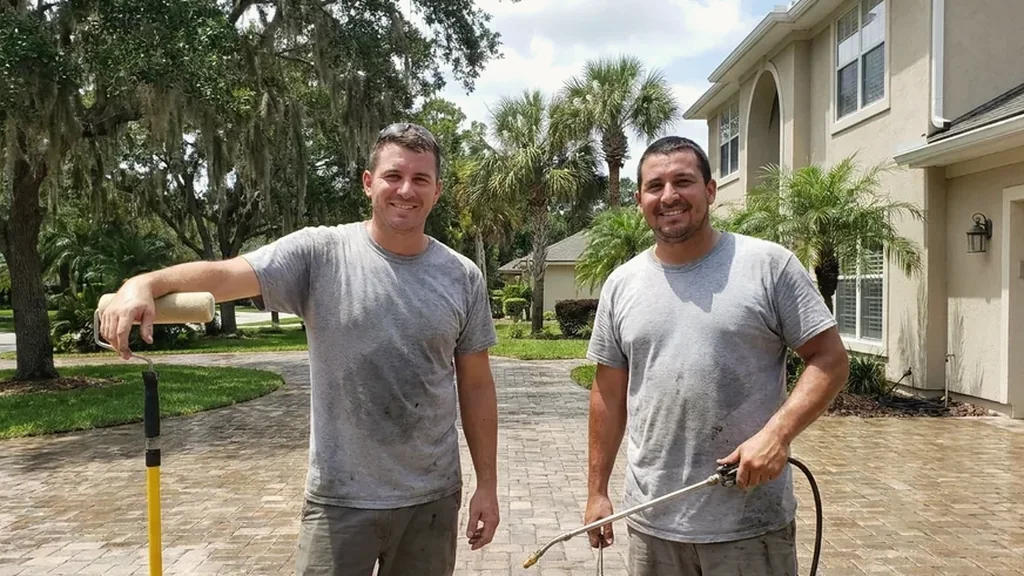
How does a paver sealing job work in Ponte Vedra Beach?
Check the surface, the roots and the old coat
The contractor walks your Ponte Vedra Beach property first. Salt dullness, shade growth, root lift and any old sealer are all noted. Lifted pavers are marked for resetting, since sealer would lock the lift in place. If a past owner used solvent-based sealer, water-based is ruled out. You leave the visit with a price in writing. Cars can stay in the driveway for the first look. If you have photos of past storm damage or earlier sealing work, share them, since they speed up the plan and the price.
Wash gently and lift the salt
A wash comes next, with a method chosen to protect the joints and the surface. Salt film, algae, tannin from oak leaves and stains come off at this stage. Rinse water is kept off wood, cedar and stone beside the walk, and off pool screens. Heavier stains may need a second pass. Delicate surfaces get a gentler touch. Plants and trim along the walk are covered. Large pool decks take the longest here, so plan for most of a day and a quiet yard while the crew works.
Replace the sand in the joints
Sand leaves with the wash, so the joints are refilled before the coat. On a coastal lot with wind and storms, full joints matter even more. They hold the pavers in place and keep weeds out. Once the joints are full the surface gets swept, and a dip that remains is marked for repair. The contractor picks sand that blends with your pavers and shows you the choice. Where pavers meet the curb or garage slab, the joints open first, so those spots get a second look.
Wait for a dry surface
A dry surface is a must for sealer, and coastal dew or morning mist can linger. One Ponte Vedra Beach company advises never sealing over damp pavers or just before a downpour. The contractor tests the shaded spots before starting. If the forecast turns, the job moves a day. Better a late start than a coat that dries cloudy. Coastal air can hold moisture even on a clear morning, so a delayed start is common. You may get a call the evening before if the forecast looks wet.
Apply the finish and keep traffic off
Spraying comes first and a back-roll follows, which pushes sealer into the joints, one Jacksonville company says. Feet can return after a few hours, while cars need about a day. Use the garage or the street for parking. Keep a note of the product name, because a matching coat is easier next time. Wind-blown dust can stick to a fresh coat, so keep the area clear while it cures. Move furniture and planters back only when the contractor says so.
Complete paver services in Ponte Vedra Beach
Salt and grime come off first, then sand goes back in, the surface dries, and the sealer follows. Putting the wash ahead of the coat keeps salt from being sealed in. Drives, decks, courtyards and walks all get this order. For timing on your lot, call (386) 270-5568.
Surfaces here wear in different ways. A driveway near the ocean collects salt and sand, a pool deck takes splash and chlorine, and a courtyard under oaks stays damp. Stone and travertine soak up more than concrete. Tell the contractor which surfaces you have when you request a free estimate, and every one gets a separate price.
The two sealer types are water-based and solvent-based, and each comes in finishes from matte to wet. A solvent-based coat from a past owner rules out water-based on top. Stone and stucco look right with matte, and concrete gains depth from a wet look. Call (386) 270-5568 to compare.
Timing here follows the coast. Morning mist and afternoon storms can end a day early, so the contractor offers a backup date. Salt and wind also push dust onto a fresh coat, which is one reason the keep-off time matters. To find a date that suits you, request a free estimate.
Questions to ask before you hire
- Can you seal my beach walkover pavers without getting sealer on the dune grass?
- What time of day do you start, given how humid the mornings get here?
- My driveway slopes toward the street after the last flood, so can you tell if sealing will help or if the base needs work?
- Can you add a non-slip finish where my outdoor shower drips onto the pavers?
- Do you charge extra for pavers that sit under a beach house raised on pilings?
- How do you handle the rust stains from a sprinkler on well water?
- Can you work around my guests' check-out and check-in days at my rental?
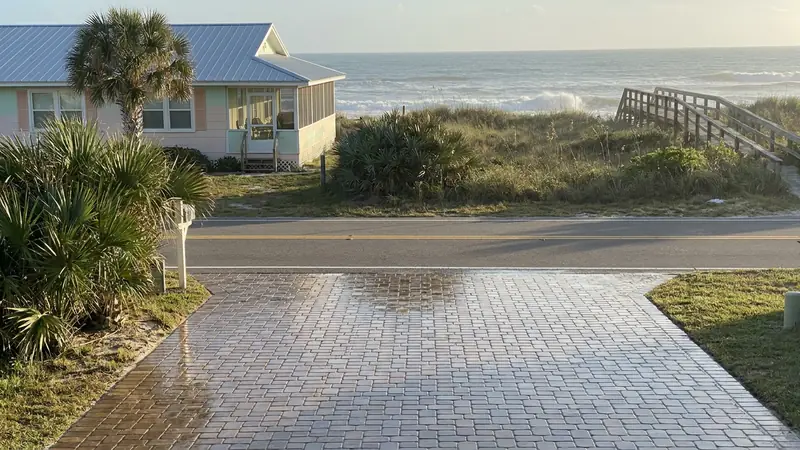
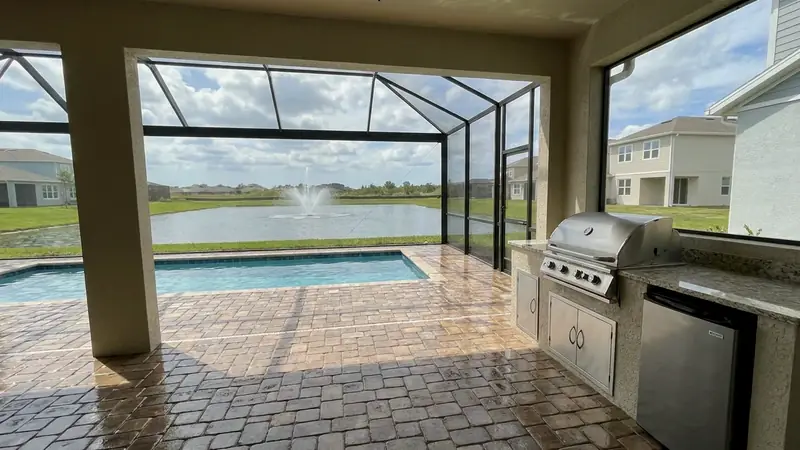
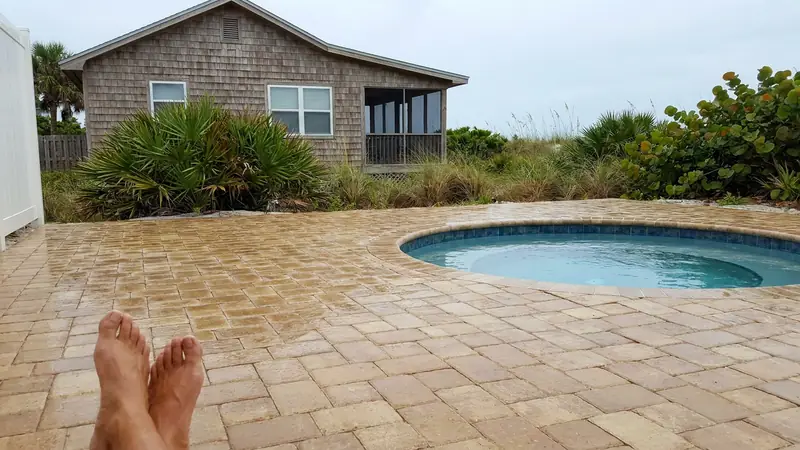
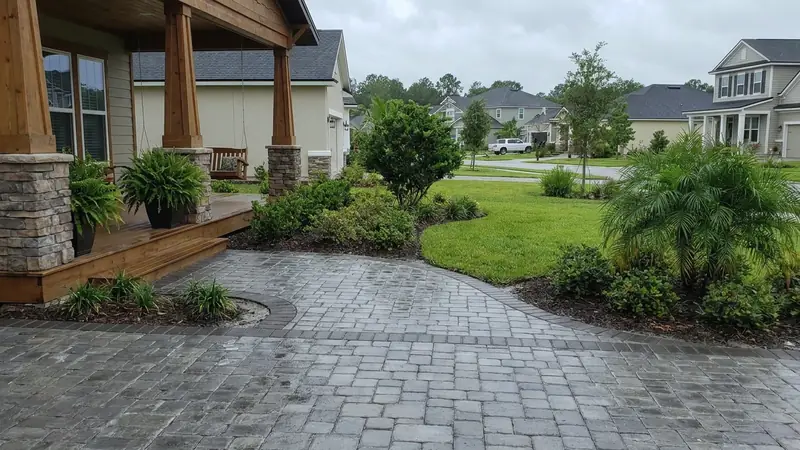
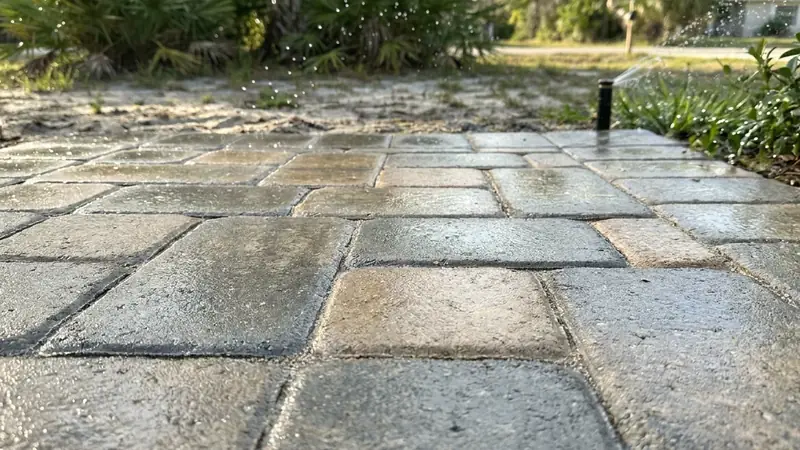
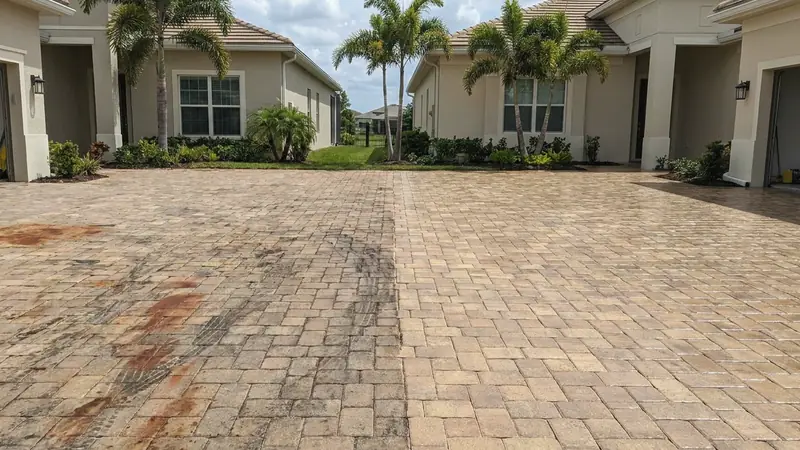
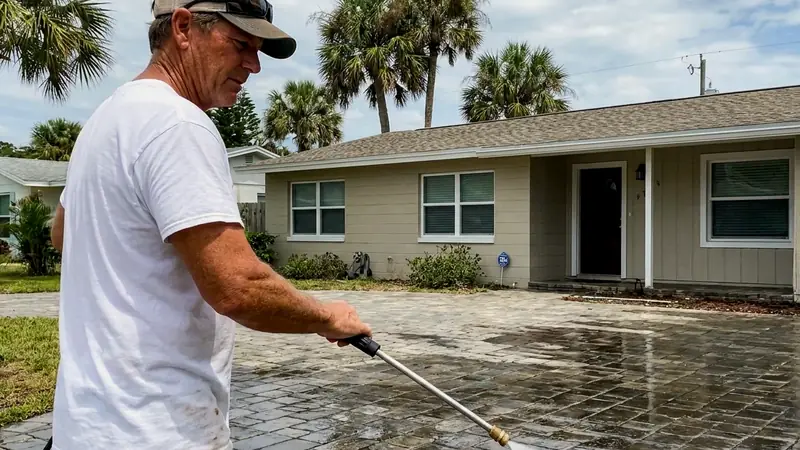
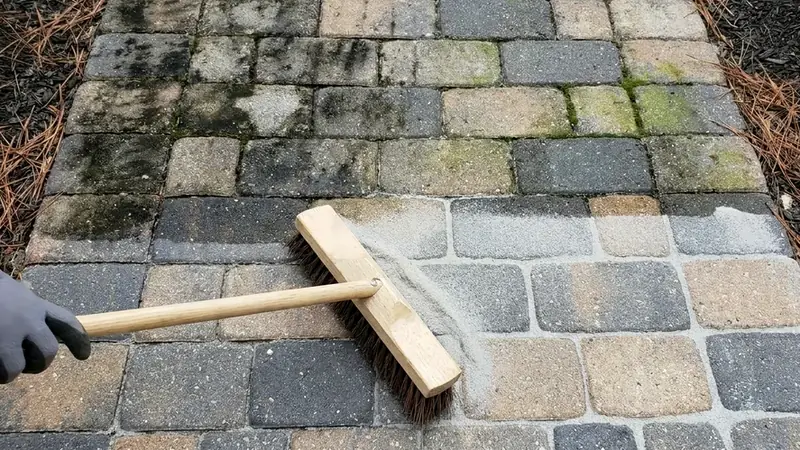
What do sealed pavers look like around Ponte Vedra Beach?
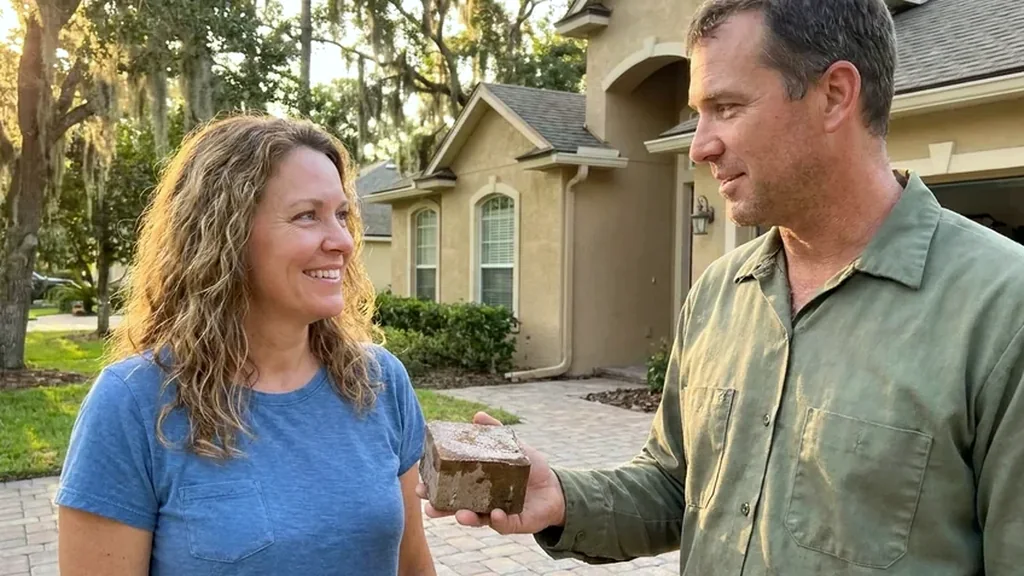
Why local matters in Ponte Vedra Beach
A contractor who works in Ponte Vedra Beach knows how the coast treats pavers. Salt, wind-blown sand and morning mist all shape the schedule and the method. Someone from far inland may not plan for them. For a contractor who works the beach side of the Intracoastal, call (386) 270-5568.
Local crews also know the rules around trees and associations. A protected oak is not something to cut for a driveway, and a gated community has its own entry hours. Asking about both early keeps the day on track. To check how it applies, request a free estimate and describe the trees and gates on your lot.
Ponte Vedra Beach lies about 18 miles southeast of downtown Jacksonville and 26 miles north of St. Augustine, so crews reach it from both directions. A nearby crew can return quickly after a rain delay. Call (386) 270-5568 and you should hear back within 1 business day, often much sooner.
How do the Inn, Sawgrass and the beach help a contractor find my street?
They are easy to name, and each places you quickly. The Ponte Vedra Inn and Club debuted in 1928, and its 1937 clubhouse still stands. Sawgrass has held The Players Championship on the Stadium Course since 1982, and Mickler's Landing, the first public beach, sits two blocks east of A1A. Near any of these, you can request a free estimate and name the cross street.
The name Ponte Vedra came from Pontevedra on the Atlantic coast of Spain, and National Lead Company began developing the area in 1929. The community lies east of the Intracoastal, south of the Duval County line and north of Vilano Beach. The GTM Research Reserve covers about 76,000 acres to the south. If you live near the reserve or the Intracoastal, call (386) 270-5568 and say so.
Frequently Asked Questions
How much is sealant for pavers in Ponte Vedra Beach?
For a clean, sand and seal, plan on the $1.50 to $3.00 per square foot that Northeast Florida companies commonly publish. Stone, salt dullness, root repairs and old sealer move the number. Request the total square feet in writing on the quote. Read each bid line by line, because a low price may leave out the joint sand or the pool deck.
How long do paver sealers last in Ponte Vedra Beach?
Most quotes run from two to five years before a recoat, and coastal drives may sit at the short end. One local company says driveways near the coast may need a new coat about every 18 to 24 months. Water that sinks in rather than beading up shows the coat is worn out. Test a few spots on a dry day, starting with the side that faces the wind. That side wears first.
Is it good to seal pavers in Ponte Vedra Beach?
Yes, for most surfaces. Sealer slows color fade, helps hold joint sand and makes a salty surface easier to rinse. A company here says salt can leave unsealed pavers chalky over time. An estimate shows whether yours are due. Salt-dulled color, open joints and green film beside the oaks are what the contractor checks first.
Is it better to spray or roll paver sealer?
Contractors usually do both. Both, in sequence, according to a Jacksonville company: spray first, then back-roll to push the sealer into the joints. Ask your contractor to explain the plan for stone or concrete. Spray gives wide, even coverage, and the roller smooths pooling.
What are the downsides of sealing pavers in Ponte Vedra Beach?
The main downsides are upkeep and timing. Sealer wears and needs another coat later, a wet look shows scuffs sooner than matte, and the surface must be dry. Damp coastal mornings can push a job to a later start. Salt and dust can also settle on a fresh coat, so the keep-off time matters. These are manageable with planning, and an estimate shows how they apply to your lot.
Do I need county approval to seal pavers in Ponte Vedra Beach?
Sealing an existing surface does not add area, so the county's 40 percent cap on structures and hard surface is not the issue. Adding a patio or widening a drive could be, so check first. Your association may also review the look of a new finish. Ask for its guidelines before you book, and send the sealer name and finish if it asks for them.
What is the average cost to seal pavers in Ponte Vedra Beach?
For a full clean, sand and seal, Northeast Florida firms commonly list $1.50 to $3.00 a square foot. The average for your lot depends on size, material and the old coat. A free estimate gives a number for your own pavers. An average is only a starting point, because a small walk and a large deck price differently.
Ready for a Free Estimate in Ponte Vedra Beach?
Call (386) 270-5568 and tell us about your pavers.
Free, no obligation