
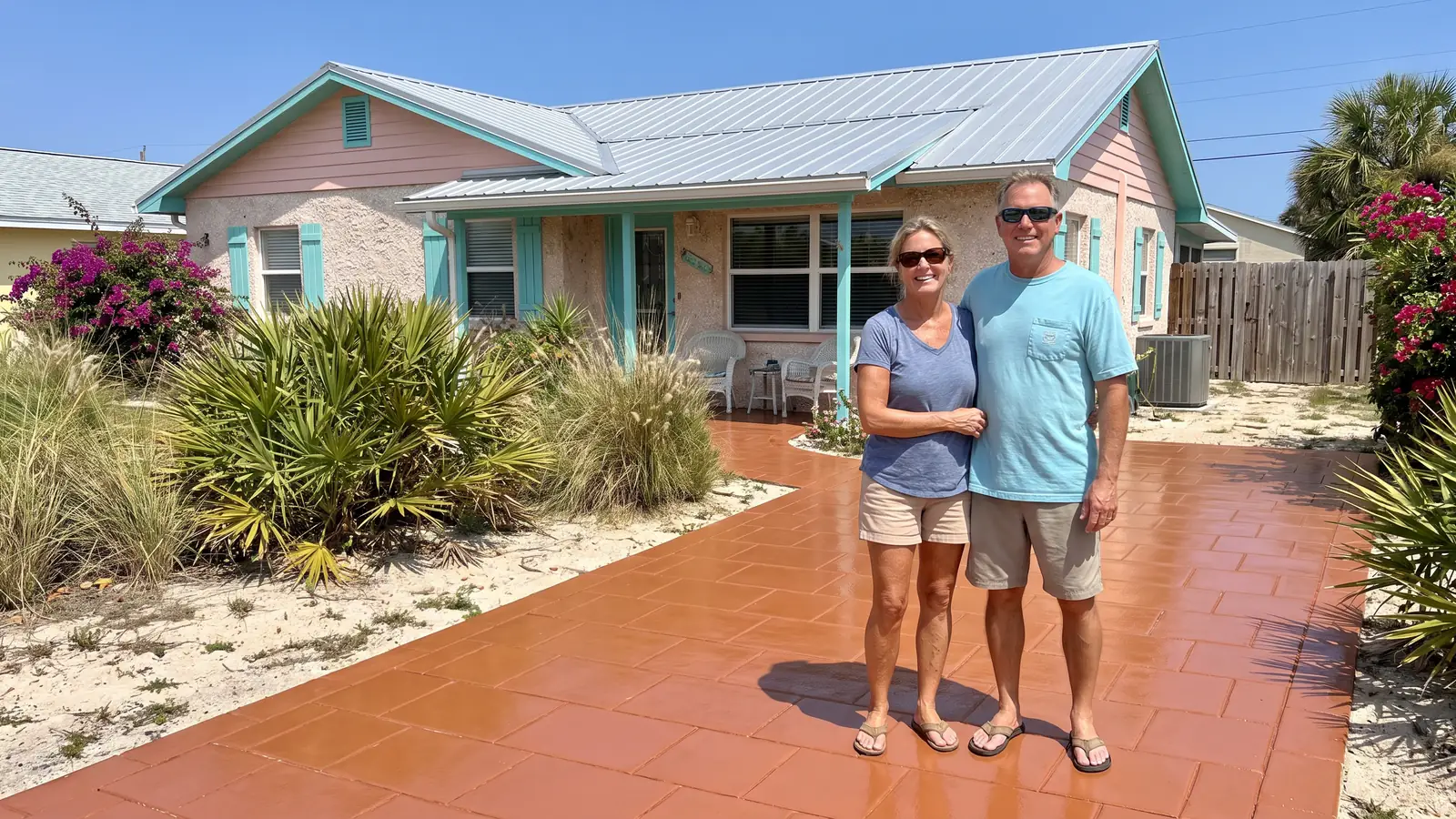
Paver sealing for Palm Valley homes
Paver Sealing in Palm Valley, FL
Palm Valley pavers that sit through standing water need a careful dry-out before sealing, so call (386) 270-5568 to plan it.
- Brings out deeper paver color
- Fresh joint sand helps lock pavers in place
- Gives weeds less room to grow
- Makes the surface easier to keep clean
- Free estimate, no obligation
Request a Free Estimate
Free, no obligation.
Fast, careful paver sealing in Palm Valley
Paver sealing in Palm Valley starts with a free estimate for the driveway, walk or pool deck on your lot. A local contractor washes, re-sands and seals pavers, and plans the dry-out when the ground has been wet. Call (386) 270-5568 and the answer comes within 1 business day, usually sooner. The estimate is free.
Consider a patio that holds a gray film after every big rain, with green creeping along the low edge and sand missing from the joints. Washed, refilled and sealed, those stones read as one clean color and shed water instead of holding it, and the joints stay full. To describe your own spot, request a free estimate.
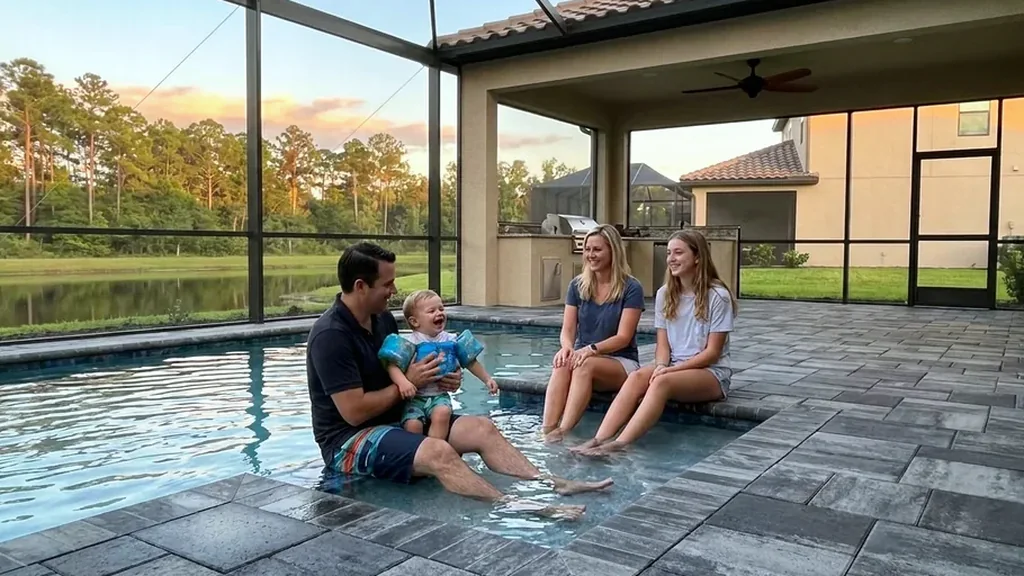
Why hire a local paver sealing contractor in Palm Valley?
Palm Valley sits low beside the Intracoastal Waterway, so water decides how and when pavers can be sealed. A local contractor plans around that, and you can request a free estimate to hear how it fits your lot.
A look at your lot
The contractor checks where water stands on your Palm Valley pavers before quoting. The estimate is free and carries no obligation, and a visit does not commit you to anything.
A range to measure against
Companies around Northeast Florida commonly publish $1.50 to $3.00 per square foot to clean, sand and seal. Hold any Palm Valley bid up to it, and ask what the quote includes.
A dry-out plan
After heavy rain or high water, pavers need time before sealing. The contractor sets the date by how dry the stone has become, not by the calendar, and tells you why if it slips.
Condo and HOA friendly
Shared patios and walks often belong to an association. The contractor can work from your manager's request and a written scope, with the finish named up front.
Get Your Free Estimate in Palm Valley
Tell us about your pavers in Palm Valley.
Free, no obligation
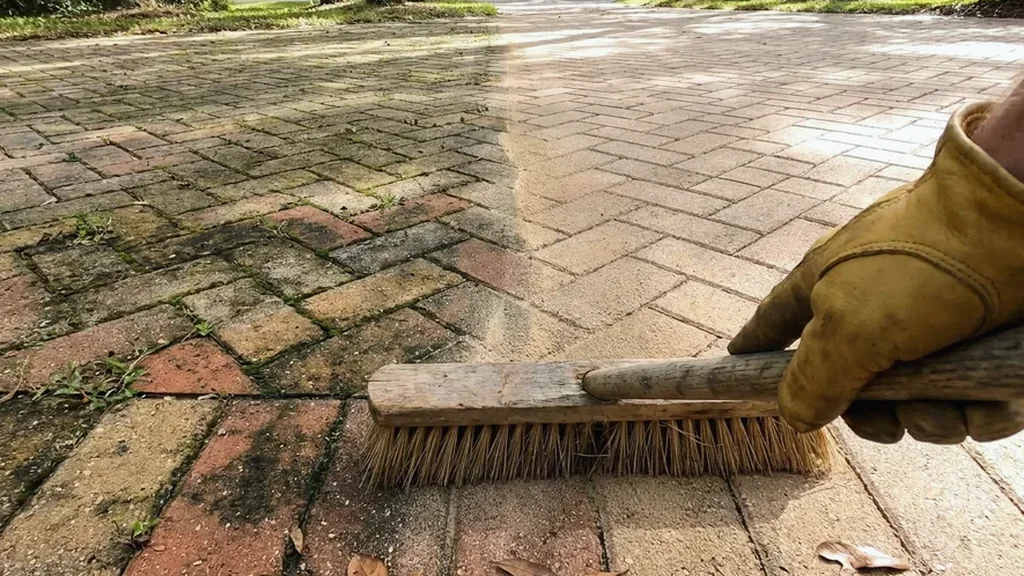
What paver problems show up most in Palm Valley?
Standing water after big rain
Pavers that sit in standing water pick up silt, which means a wash comes first and a long dry-out follows. Sealer laid over that film would lock it in, so the order matters. Low ground near the canal and the creeks keeps water on a driveway longer after heavy rain.
Washed-out bedding after storms
A landscape guide says heavy rain can strip bedding sand, and a contractor may have to reinstall stones. A low spot found early is a small fix, which means it is worth a look before sealing. A low spot left alone tends to widen, and the sealer would only hold it in place.
Salt spray off the waterway
University of Florida notes that salt spray reaches within a couple of miles of salt water. A paver maker says airborne salt can crystallize on stone as moisture dries and shows more on pale pavers. A Jacksonville company puts coastal driveways at about 18 to 24 months between coats, so a rinse and a recoat keep a Palm Valley surface clean. Pale stone shows salt splash first, and darker stone hides it longer.
Shared walks and condo patios
In Palm Valley, 2,511 housing units sit in buildings of 3 to 19 units. Florida law puts condo common elements in the hands of the association, so owners rarely hire alone. If your pavers are shared, the request usually goes through your manager, so the contractor works from a written scope. That also keeps neighbors from seeing a half-done walk, because the whole run is done together.
Pavers from the nineties
The median Palm Valley home was built in 1991, and homes in Old Palm Valley date from 1993 to 1999. Pavers that old have often been sealed once or twice, or never, and the records are rarely kept. The contractor checks for old product, peeling and failed coats, and for stones that have shifted over the years, which means the right sealer is chosen from the start. Choosing wrong means peeling or cloudy patches later.
Which Palm Valley areas sit lowest, and does that change a sealing job?
It can, since a real estate page that mapped 12 Palm Valley Gardens listings found 7 in a FEMA special flood hazard zone, with a median elevation of 6 feet. Old Palm Valley's median is 7 feet, and Plantation Oaks sits at 8 feet with none of its mapped homes in a flood zone. The median Palm Valley home was built in 1991, and most housing units are single-family detached homes with long driveways and deep lots. Lower lots stay damp longer, so call (386) 270-5568 and mention yours.
Roscoe Boulevard backs up to the Intracoastal Waterway. Pavers on those streets may need extra time to dry, which is a reason to pick the date by the weather. You can request a free estimate to set a sensible one.
Odom's Mill has more than 230 single-family homes and a community pool, and Dolphin's Cove, Seaside and Palm Valley Landing round out the map. Pool decks and long driveways there are the usual jobs. Many of these streets have associations, so check your documents first. Then call (386) 270-5568.
What does paver sealing cost in Palm Valley?
Across the region, prices are published at $1.50 to $3.00 per square foot to clean, sand and seal. A Palm Valley price lands where it does because of size, joint condition and how much drying time the lot needs. Call (386) 270-5568 to get a figure for your own lot.
Salt film, silt, mildew and old coats all add prep. Prep is most of the work, since one company says it spends two to three hours for each hour of sealing. A free estimate shows what your pavers need, and you can request a free estimate.
| Paved area | Typical example | Clean, sand and seal |
|---|---|---|
| 300 sq ft | Small patio or walkway | $450 to $900 |
| 600 sq ft | Two car driveway | $900 to $1,800 |
| 1,000 sq ft | Large driveway or pool deck | $1,500 to $3,000 |
| 1,500 sq ft | Driveway plus pool deck | $2,250 to $4,500 |
Math based on the $1.50 to $3.00 per square foot that Northeast Florida paver companies publish. Your contractor sets the actual price after seeing the surface. Repairs, leveling and stripping failed sealer are usually extra.
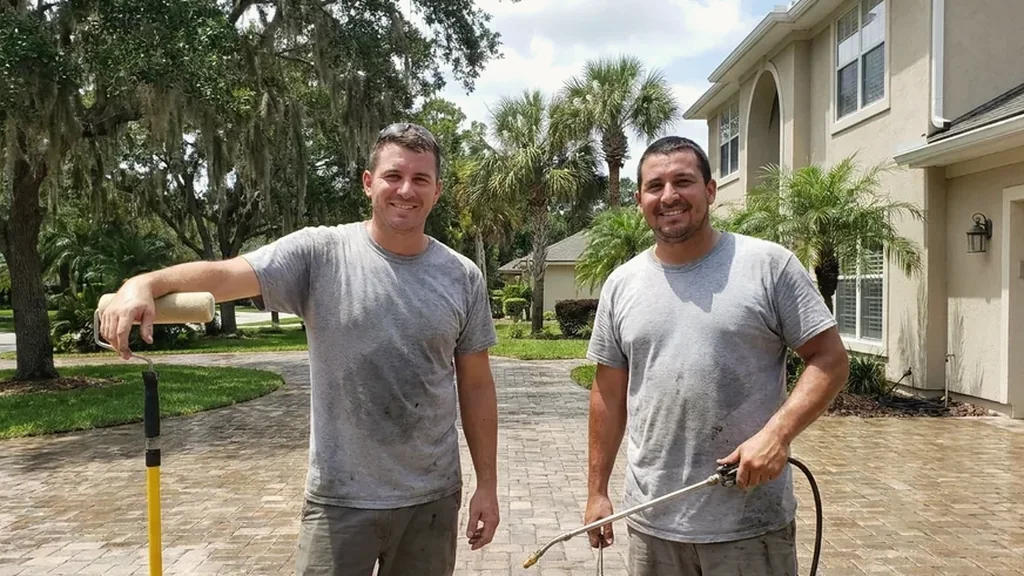
How does a paver sealing job work in Palm Valley?
Walk the lot and check the water
The contractor notes where water pools, where the ground is soft, where the downspouts empty and whether stones have sunk. Low spots are marked for resetting. You get the plan and the price before any work is booked, along with a note of how long the dry-out may take.
Wash and rinse
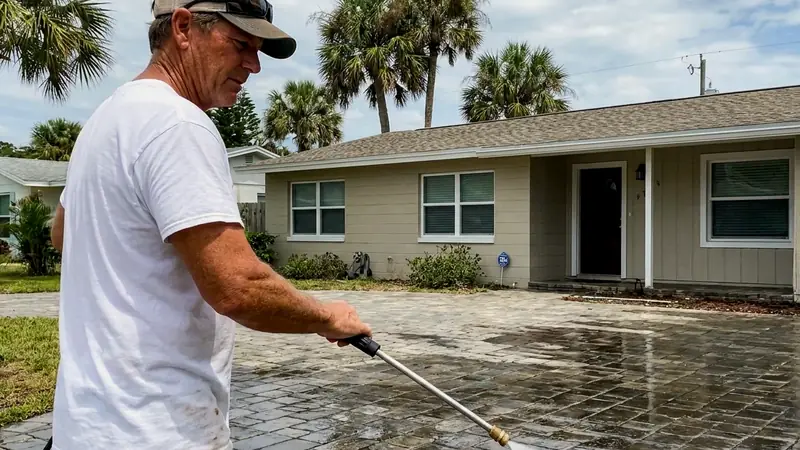
A low-pressure wash lifts silt, salt film and mildew without stripping the stone, and the rinse water is directed away from the pool and plants. Rinsing matters near the waterway, since salt can crystallize on stone as it dries. Joint sand comes out with the wash, and it is replaced before sealing. A thorough rinse leaves no salt film behind.
Let the stone dry out
After rain or high water, pavers hold moisture for a while. The contractor waits until the surface is dry, which in a humid month can be longer than a day. Sealing early traps water and clouds the coat, and a cloudy coat has to be stripped. Waiting a day or two costs far less than redoing the work.
Fill and set the joints
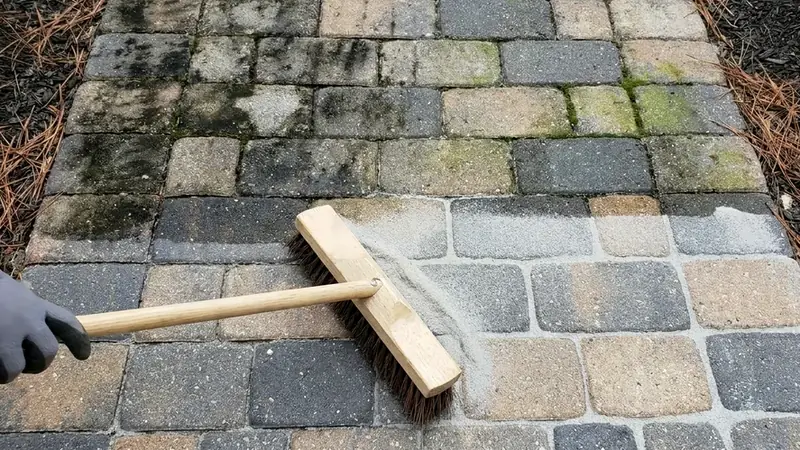
Fresh joint sand goes in until the joints are full and firm, and it is swept from the surface so no film is left behind. A landscape guide says joints with low sand should be topped up, and reset stones are tamped level. Sealer locks that sand in place on the next step.
Spray, roll and wait
Sealer is sprayed and back-rolled for an even coat, with a low-sheen option for pool decks and a matte option for driveways. Feet are usually fine within a few hours, and cars stay off about a day. Sprinklers and rinse hoses stay off the area until the coat has cured. A second coat follows on thirsty stone.
Complete paver services in Palm Valley
A Palm Valley job runs in a plain order: look, wash, dry, re-sand, seal. The dry step gets extra weight here, because low lots stay damp. Sealing too soon traps moisture and clouds the coat, so the contractor waits for dry stone. Pick the plan that fits your lot, and request a free estimate.
Different areas call for different sealer. Driveways take tire turns and salt film, and a pool deck needs grip, so a penetrating or low-sheen finish suits it. Wet look shows scuffs sooner than matte. Call (386) 270-5568 and say which areas you would like done.
Old product has to be sorted first. Water-based sealer cannot go over solvent-based sealer, and a failed coat is stripped before new sealer goes on. Stripping adds time and cost, but it gives the new coat a clean base. To find out what is on your stone, request a free estimate.
Timing follows the water. Jacksonville's records put the driest months from November through April, and storm season runs summer into fall. The contractor waits for a dry stretch and moves the date if rain threatens, which keeps cloudy coats off your driveway. Call (386) 270-5568 to talk about a window.
Questions to ask before you hire
- How do you handle the rust stains from a sprinkler on well water?
- If a pop-up shower hits mid-job, how do you decide whether to stop or keep going?
- Can you work around my guests' check-out and check-in days at my rental?
- Do you charge extra for pavers that sit under a beach house raised on pilings?
- I live a block off A1A and salt spray coats everything, so does that change which sealer you pick?
- If a storm washes sand out of my joints, do I need to redo the whole job?
- Will you rinse sand off the pavers before the wash, or does the wash take care of it?
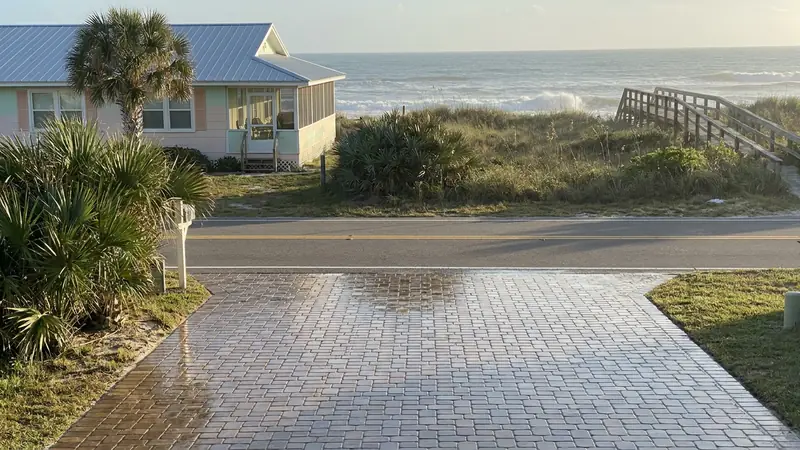
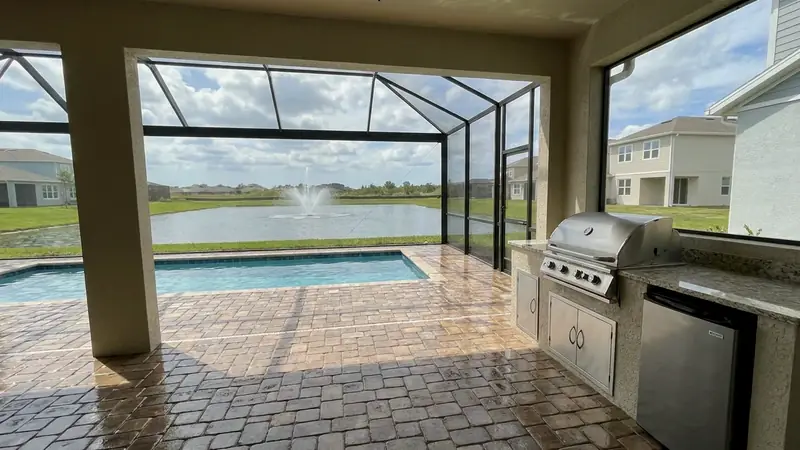
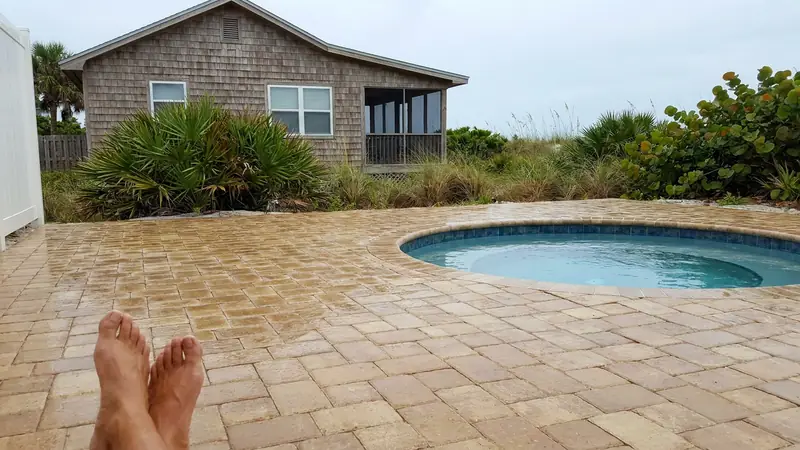
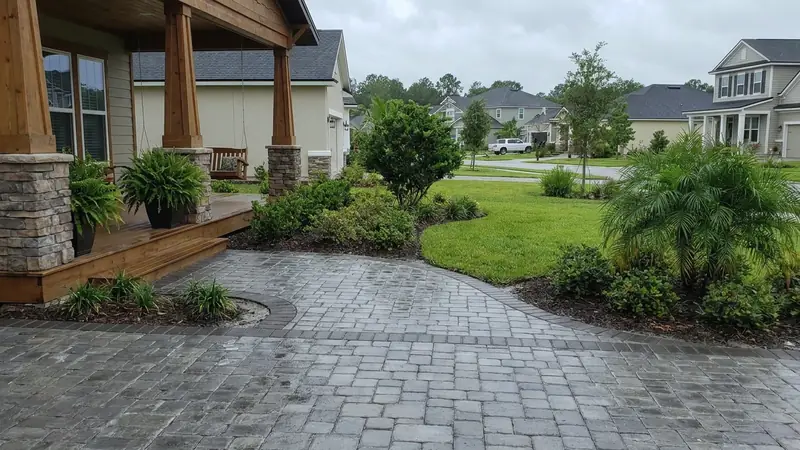
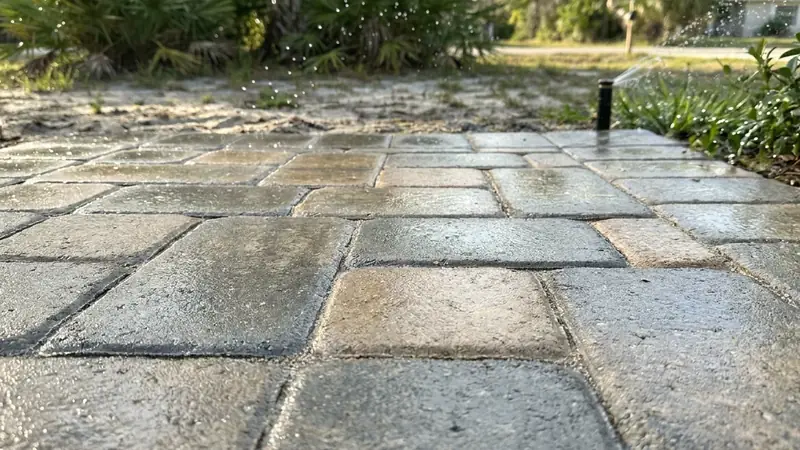
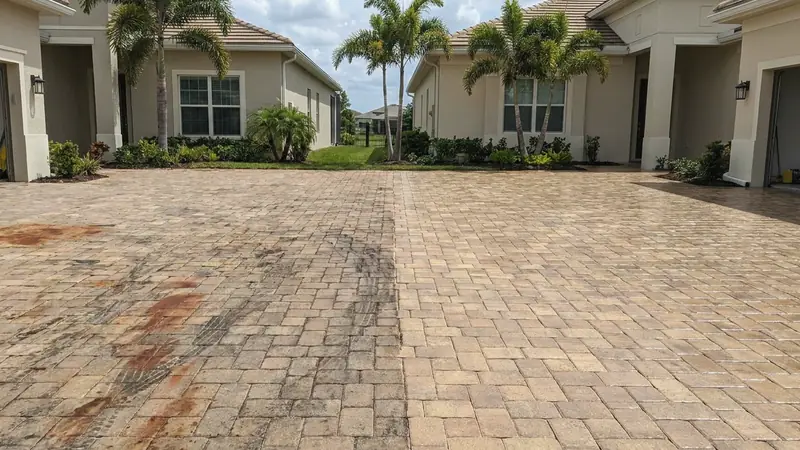
What do sealed pavers look like around Palm Valley?
Why local matters in Palm Valley
A local contractor knows Palm Valley is low. It sits beside the Intracoastal Waterway with a canal, creeks and marsh nearby. That setting shapes the schedule, and a contractor who knows it will not rush a wet slab, and will tell you plainly when to wait. To start, request a free estimate.
A local contractor also knows who decides. Odom's Mill, Plantation Oaks and many other streets have associations, and shared condo walks answer to a manager. A job goes smoother when the request and the finish are cleared first, and a written scope helps with that. Call (386) 270-5568 to talk it through.
A local contractor knows the salt too. Wind off the Intracoastal carries it inland, and it shows on pale stone first, often as a dull, chalky look. A short rinse routine between coats helps, and the contractor can suggest one for your lot. Ask about it when you request a free estimate.
Where do Palm Valley's bridge, canal and community center sit?
The Palm Valley Bridge carries County Road 210 over the Intracoastal Waterway, and the fixed four-lane span opened in 2002 where a 1937 drawbridge stood. Palm Valley Road runs through the area from there, and the neighborhoods include Palm Valley Landing, Plantation Oaks, Seaside, Odom's Mill and Dolphin's Cove. Want a free look at your pavers? Call (386) 270-5568.
The Palm Valley Community Center at 148 Canal Boulevard carries a state marker about the old Plains of Diego, a hammock of oaks, magnolias and Sabal palms. A canal dug in 1908 joined two rivers nearby. The University of Florida notes that people living within a couple of miles of salt water have likely seen salt spray damage on plants. If you live close to either, you can request a free estimate.
Palm fronds were the local crop for years, with families shipping about 400,000 a year to northern churches. The farms have given way to homes overlooking the waterway. A Jacksonville paver company says beachside winds push salt spray that can dull the surface, and that driveways near the coast need resealing about every 18 to 24 months. Call (386) 270-5568 and tell the contractor how close yours sits.
Frequently Asked Questions
Is it good to seal pavers in Palm Valley, Florida?
Yes for most lots, because sealer holds joint sand and keeps silt and salt film from soaking in. It is not required, and it will not stop floodwater from reaching a low yard. Low lots near the waterway gain the most, and a stone that has sunk is reset first.
Is there a pressure washing business that seals pavers in Palm Valley?
Yes, a local contractor can wash, re-sand and seal pavers in Palm Valley, and many pressure washing companies add sealing to their list. Cleaning and sealing are normally one job, since the wash prepares the stone and the sealer finishes it. A free estimate covers both steps, so you see one price for the whole job.
Why is paver sealing so expensive in Palm Valley?
Prep takes most of the time, and the product is a smaller part of the bill. One company says it spends two to three hours of prep for each hour of sealing, and wet ground adds drying time. Stripping old sealer adds more, and so does a stubborn silt film from a wet season.
How much does it cost to re-sand and seal pavers in Palm Valley?
Companies in the region commonly publish $1.50 to $3.00 per square foot to clean, sand and seal. Joint condition, lot size and old coats move the figure, and tight access or stairs add prep time. The estimate is free and covers the whole job.
How long does paver sealer last near the Intracoastal in Palm Valley?
Near the coast, one Jacksonville company puts it at about 18 to 24 months for driveways, and companies commonly quote two to five years in general. Salt, sun and pool chemicals push toward the short end. Water that stops beading means it is due, so a quick sprinkle test tells you.
Does salt air near the waterway change how pavers are sealed?
Somewhat, mostly through the rinse and the finish. Salt can crystallize on stone as moisture dries, and it shows most on pale pavers. A rinse before sealing and a low-sheen finish help, and the contractor picks both with the surface in mind. A routine rinse between coats also keeps salt from building up.
Can pavers be sealed after Palm Valley floods?
Yes, after they have dried out. Silt is washed off and the joints are checked, because heavy rain can strip bedding sand and loosen stones. Sealer needs a dry surface, so the date depends on how fast your lot drains. Standing water or soft ground needs to clear first.
Who approves paver sealing on a shared Palm Valley patio?
The association, in most condo cases. Florida law makes common elements the association's responsibility. Ask your manager, and the contractor can work from a written scope. The request often goes through the property manager, not each owner.
Should I pick matte or wet look for my Palm Valley pool deck?
Matte or low sheen is the safer pick. Gloss can be slippery when wet without an anti-slip additive, which matters on a deck where people go barefoot. Wet look also shows scuffs sooner, and a penetrating sealer keeps grip. Ask for the finish name on the quote so you can compare.
How long should I stay off pavers after sealing in Palm Valley?
Walk on them after a few hours and wait about a day before parking. Humid air and morning dew can stretch that. The contractor tells you the time for your sealer and the weather.
Do I need to be home for a Palm Valley paver estimate?
Often not, since the surface can be measured from outside. One Jacksonville company says owners need not be present. Mention gates, pets and any low spots when you book.
Does my Palm Valley HOA need to approve a sealer?
It depends on your documents. Florida law lets an association review appearance only as far as its declaration says. Natural-look finishes are more likely to count as upkeep. Check your declaration before choosing a glossy coat.
Ready for a Free Estimate in Palm Valley?
Call (386) 270-5568 and tell us about your pavers.
Free, no obligation